Plenty of cults are intimidating and more than slightly fascinating from a psychological perspective. It’s hard to believe that anyone would ever join a cult, let alone kill for one, right? Wrong. A large majority of cults find followers who would be willing to do just that.
The Movement for the Restoration of the Ten Commandments of God
Everyone remembers the Y2K scare- the fear that computers and everything would proceed to shut down as of January 1, 2000. The Ugandan followers for the Movement of the Restoration of the Ten Commandments of God truly believed that the world would end on that date, and when it didn’t, followers began to leave. The leaders began to frantically try to recruit new members and keep old ones, saying that the calculations were wrong and the world would end in March of 2000. When over 500 people gathered in their church for a “last days” ceremony, the church literally blew up. Authorities thought maybe it was mass suicide at first, but most of the bodies found has poison in their systems, or were strangled prior to the explosion occurring.
Order of the Solar Temple
This cult turned out to be one of the most self-destructive and self-harming cults in recent history. In 1994, members of the cult murdered a baby because leaders told them the baby was the Anti-Christ. After that, two mass suicides occurred in Sweden and Canada, involving gunshots, strangulation, burning, or poisoning at the hands of cult members (or in a few cases, by the leaders). Over 100 people died before the cult “went underground.” It’s expected that the cult has over 400 members today, but the numbers are not precise as its not a very public group.
Branch Davidians
David Koresh, the leader of the Branch Davidians, famously lit himself, his followers, and his entire compound on fire when Texas authorities tried to arrest him on accusations of child molestation and sexual abuse. The Branch Davidians believed that Koresh was the Messiah, and he actually took over the original leader’s compound some years prior to his run in with the law. The standoff with law enforcement lasted 51 days, and in the end 76 people died (between Davidians and law enforcement).
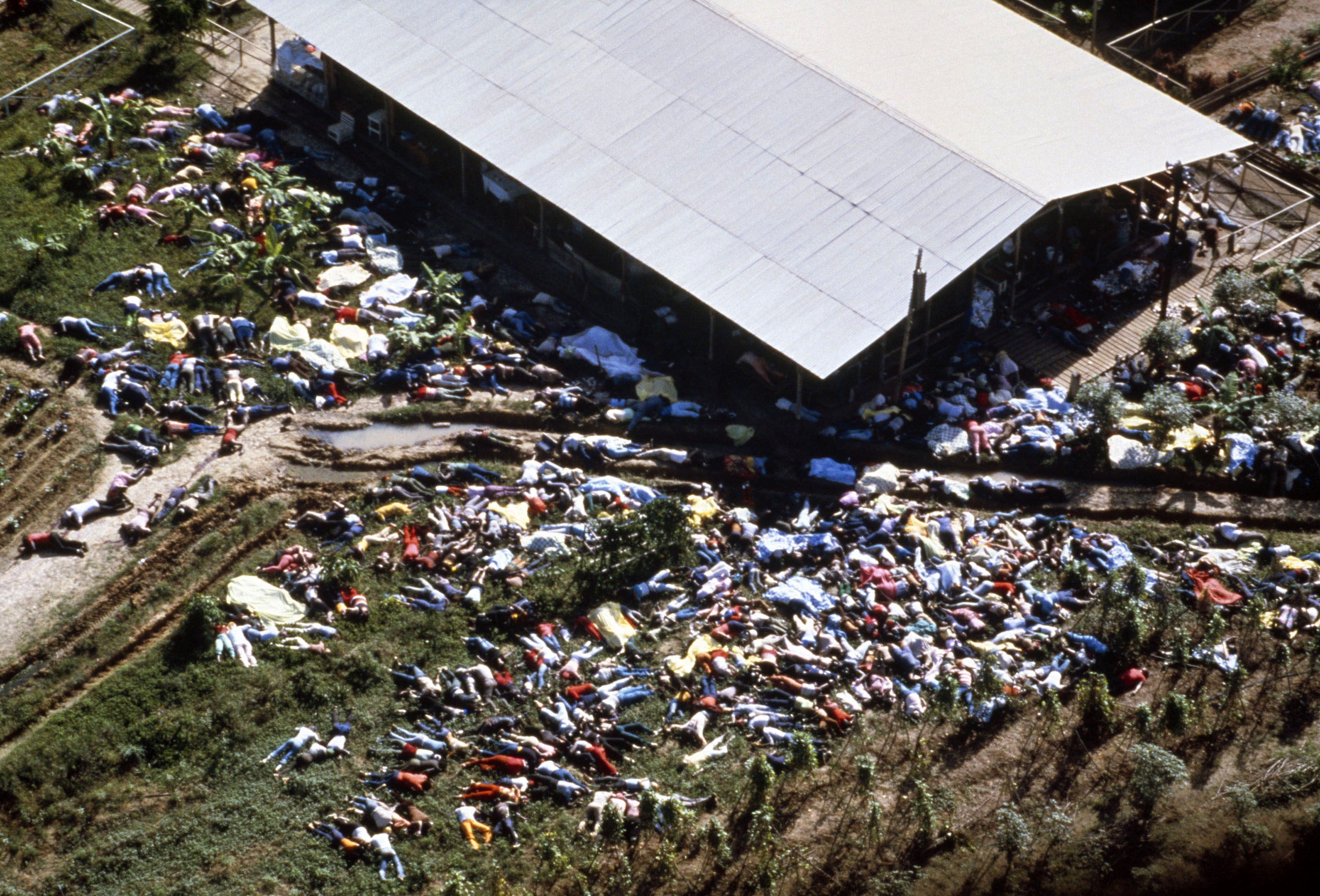
The People’s Temple
This group is famous for creating the term “drinking the Kool-Aid.” In 1955, Jim Jones began the People’s Temple in Indiana. After a while, the group expanded to California, before Jones had to flee to Guyana- where a number of people followed him. In 1978, the group met to discuss how they were going to handle the impending forces of government on Jones’ previous actions, involving child molestation, socialism, etc. Jones prepared a large tub of juice with a cocktail of drugs, and told everyone to commit revolutionary suicide. Jones told followers that this was the best way to show how they wanted to go out, and to prove that they would not fall prey to capitalism. 909 Americans died that day, in what is considered the highest American casualties until 9/11.